Showing posts with label Bloom Bags. Show all posts
Showing posts with label Bloom Bags. Show all posts
Wednesday, March 14, 2012
Bloom bags for Microsoft event
I just received an order from Microsoft! I'm so happy :) It's an order for 150 bags, which is a good start. They chose the messengers, one of our most popular models. Right now we are having the logo printed on the fish feed bags and then we can start sewing. Anyway, just wanted to quickly update readers. Although I don't write as much now cos the bags and the guesthouse keep me busy, Bloom Cambodia is still very much in operation. We had our best ever high season here in Siem Reap, and I am glad things continue to look good for us in 2012. Another piece of good news: Bloom Garden Guesthouse, won TripAdvisor's Traveler's Choice 2012 and was also voted top 20 B&B/inns in Asia, the only one from Cambodia to have made it to the list. If you are ever in Siem Reap, do drop by the Bloom shop opposite the provincial hospital, near the Old Market to check us out.


Sunday, April 24, 2011
Happy Khmer New Year
15 April 2011
Sousaday joul ch’nam thmei! Happy Khmer New Year! It's my fifth Khmer New Year - how time flies. I’m working in the Bloom shop here in Siem Reap for the next three days as my team has gone back to their home towns in the provinces. The Bloom women come from all over Cambodia – Prey Veng, Svey Rieng, Kampong Thom, Kampong Cham, etc.
Siem Reap is so quiet today, as most Khmers have gone home for the three- day holiday. There are few tourists around, probably because it’s so hot (my neighbour keeps spraying the ground with water in a bid to keep his shop cool.) The tourists must all be at the pool. It’s so quiet I should close the shop but I keep thinking I’m paying rent and everyday I don’t open and sell something, we are losing money.
I’m taking this opportunity to finally write something for the blog. It’s been three months – the longest I’ve gone without writing I think.
I’ve been so busy since opening the Bloom Garden Guesthouse in September. Already, we are number three on TripAdvisor, which is very motivating to our small guesthouse team. You can see the pride in Kagna’s, Ya’s, Rathy’s and Piseth’s eyes. Every time we move up the ranks they tell each other excitedly and seem more driven to be the best.
The guesthouse business can be tiring – well, it’s as tiring as you make it to be, I suppose. I’m the sort of guesthouse owner who is involved in my guests’ holiday, simply because I’m a people-person, and love, love, love, getting to know new people.
I’m always curious about other people’s lives, so I spend a lot of time with my houseguests, having dinners, hanging out at pubs, talking about the Cambodia I know, and learning about their home countries.
One of the most amazing conversations I had was with a young Israeli couple, who told me most Israelis want peace. They were once on the right track but that process was derailed. I found the couple to be very educated, well-travelled and compassionate and humble. We had $1 tapas and drinks one night together with my expat friends, mostly NGO workers and volunteers. Their friend from Ecuador joined us (first time I’d met an Ecuadorian in my life!) and I learnt Ecuador is one of the biggest exporters of bananas, as well as having oil.
Although tiring, it’s been great fun – I’ve met so many incredible, lovely, amazing people. I will remember always these two crazy Canadian ladies, whom I met at separate occasions, both travelling on their own. I say “crazy” with affection. I love crazy people. With them, what you see is what you get. It’s the ones who appear normal that freak me out, because you never really know what they really think or feel.
One evening Alan says to a mutual friend he doesn’t understand why I invest so much in transient friendships. Well, what is one supposed to do? If I have chemistry, and “click” with someone, I’m not going to hold back and pretend it’s not there, and stop myself from getting to know someone. Anyway, it’s the nature of an expat’s life – friendships are transient because either your friends leave, or you will, someday. If you believe what the Buddhists say, everything is impermanence anyway.
Thank goodness for Facebook for keeping in touch. I do fear the Big Brother aspects of Facebook, something that is always lurking at the back of my mind, but for now, its usefulness outweighs the fear.
Anyway, so between running the guesthouse and the shop, I’ve had no desire to write. I find when my life is full, writing takes a backseat. It’s a shame because I find writing cathartic. If I spent more time writing, I’d probably drink less!
My neighbour, the owner of a restaurant, just told me his four staff members are working today because “they have the Hun Sen spirit; they want to work”. (Hun Sen is Cambodia’s Prime Minister). Yeah, right. I am sure they’d prefer to be with their families during this holiday. But I have a guesthouse now, and I understand there are no holidays for those in the hospitality business. So the staff members at the Bloom guesthouse are working over Khmer New Year. We have real team spirit and I left it up to the team to decide who works when so we’ve planned to take turns going on leave during the holidays. Rathy, who chose to work all through Khmer New Year, gets paid twice the daily rate, as is according to Cambodian law.
Monday, December 06, 2010
GREEN IS REVOLUTION!
I keep meaning to put photos up of our new shop but have been so busy with our new guesthouse. I did write in a previous entry how proud I was of our new wall. I had rented this shop space because I thought the walls outside the shop had potential as a marketing tool. It was previously salmon coloured so I white washed it and paid a Cambodian artist, Khey, to paint our new logo and the words. (Khey has 2 shops of his own, one in the Old Market and another one near my previous shop where he sells his original paintings).
This is the Bloom wall:

In the day time.

And at night.

Tuk tuks line our street at night.
I chose this slogan over many I have in mind, because I think it best encapsulates what we stand for. I had adapted it from Iran's Green Revolution, the name given to 2009's Iranian Presidential Election, in which many Persian protestors risked their lives to dispute the victory of Mahmoud Ahmadinejad over Mir-Hossein Mousavi.
Green is revolution in so many ways. As I see it, concern of the environment is waking people up from their robotic consumer lifestyles. So many people go through lives semi-conscious, never really using the brain to think about the choices we make.
To me, the green movement is revolutionary, forcing us to re-examine the way we thoughtlessly consume the earth's limited resources. We are only now beginning to think about our unsustainable lifestyles and the stress it puts on our planet. From buying hybrid cars to changing our diets (fat people cause climate change, says the British government's chief green adviser) to buying recycled goods, many, many people are trying to make changes in the way they lead their lives, so as to live more responsibly. (Some say it is too late, but I think better late than never).
For me, the green revolution also means change towards a fairer, more just, and more thoughtful society. People now care more about other people and animals and things as they think about how climate change affects poor people (half a million displaced people in Bangladesh pour into the capital Dhaka each year as their homes are destroyed); polar bears (forced to be cannibals as they have smaller platforms to hunt seals); and our planet's future ("by 2025 there could be three billion people without adequate water as the population rises still further. And massive urbanisation, increased encroachment on animal territory, and concentrated livestock production could trigger new pandemics" - 2009 State of the Future).
It is my hope that this new concern for other people also includes interest in making trade fair, in ending the exploitation of poor people in the third world, just so we in the developed world can have our cheap consumer goods.
I think it is happening. I have seen people come to the realisation that part of the problem about climate change is that rich countries are consuming too much at the expense of other countries. From there, it is not a big jump to conclude that the lifestyles of people in the developed world are being subsidised by poor people in the third world. Thinking about climate change, people realise how interconnected we are, how interdependent we are, and how one problem in one part of the world will ultimately affect the rest of us.
And this is how "Green is Revolution" applies to Bloom. At Bloom, we make products with recycled materials as our way of contributing to saving the environment. At the same time, we pay fair wages to producers and charge fair prices to customers as our way of trying to make trade fair. This is why the other part of the wall says "Making Trade Fair - one bag at a time." I hope this makes sense to you. But if not, please let me know, as it helps me sharpen my thinking about the issue.

A final pic. My team was so cute. They asked me to take a photo of them in front of the wall because they had seen many tourists do the same.

From left: Bora, Kagna, Socheata and Piseth. Hope to see you at Bloom Cambodia!
Friday, September 24, 2010
TEDx Talk
I'm a fan of TED, you know, that "Ideas worth spreading" website with sometimes brilliant speeches by really interesting people. Don't know it? Check it out here: Ted.com. I guarantee you will find an interesting topic/speech. I like this one.
Anyway, there is an extension to TED, called "TEDx", "a program of local, self-organised events that bring people together to share a TED-like experience." There is a TEDx Singapore.
I was asked to speak at one of the events, which is happening tomorrow. It's a shame I cannot make the trip home to Singapore at this time. I can't go because as you know, I have just opened a guesthouse and am currently hosting four guests. In addition, the Bloom shop in Siem Reap is moving end of the month as our lease runs out. We are moving not far from the Old Market, but moving is a Big Deal, because there are contract details to be sorted and renovations to be made.
Anyway, this is the talk happening tomorrow. It is a global event.
"The Future We Will Make"- The Bill and Melinda Gates Foundation and us TEDx organisers have teamed up for a very special 'live' global event hosted by TED curator Chris Anderson. Featuring talks by some of the world's most inspired thinkers and doers, we will look at what changes have taken place in the last decade, and what more needs to be done to ensure the health and well-being of future generations. On Saturday 25 September, we will bring you the stream of this entire event + live speakers to bring this theme to local relevance."
The organisers were looking for ideas, experiences and endeavours related to Millennium Development Goals (MDGs). And if you know Bloom, you'd know we are pursuing the same MDGs. I have to say it is just a coincidence, though -- I never started out wanting to fulfil some United Nations goal (in my ignorance, I only learnt about the goals this year, when a Dutch filmmaker who filmed Bloom told me how he got funding from his government just by quoting the MDGs). Very simply, my goals for Bloom are based on justice and fairness and equality, which I supposed are the same principles as those supporting the MDGs.
This is how my project Bloom shares many, if not all, of the MDGs:
- We alleviate poverty by giving very poor Cambodians good, fair paying, jobs with 28 days paid holidays a year (Goal 1: Eradicate extreme poverty and hunger).
- We aim to help single mothers and women in general (Goal 3: Promote gender equality and empower women)
- Their kids can go to school (Goal 2: Achieve universal primary education)
- We have 3 months maternity leave, health insurance and a great working environment (where essentially the team manages itself without me), which I guess contributes to achieving Goal 4: Reduce child mortality rate; Goal 5: Improve maternal health and Goal 6: Combat HIV/AIDS, malaria, and other diseases.
- And of course, we make use of recycled and/or organic materials in our products - please see bloomcambodia.com for our products (Goal 7: Ensure environmental sustainability)
- And Goal 8: Develop a global partnership for development. Bloom is a Singaporean founded/funded, Cambodian managed and operated, social enterprise. We have found customers and supporters all over the world, including Amnesty International, Care International, and many private organisations, big and small. In fact, we just completed an order for 1800 bags to an Australian furniture shop who are using our recycled bags as in-store carriers.
Bloom's motto is "Help the poor, help the planet", which I guess covers it.
If you are interested in this event, you can "attend" it 'live' online, tomorrow on www.livestream.com/tedx. Don't you just love the Internet?
Monday, June 28, 2010
Update on Bloom the social enterprise

I keep saying I do not write about Bloom enough. I know many people follow our story. They have emailed me to say they'd like to hear more about my experiences setting up a social enterprise and whether and how successful it can be.
I was reminded of this recently after I posted this on my Facebook: Diana Saw: "Yes! deleted about a 100 "friends"-- people i can't even recognise from their photos and others who don't matter to me. hope this way i can see the updates of only real friends."
[I usually do housekeeping on Facebook because I don't want so many friends. After a while it gets hard to keep track of everyone. When I see these people with 1000's of friends I just want to laugh. Who are you kidding? You're obviously just using them for marketing and (self) promotional purposes.]
Most people said "Phew, glad to still be on your list." But then I got this response from a Facebook friend, John.
"Diana, There's very little reason for me to still be able to see this, but I'm glad I can. I fell in love with Cambodia, Bloom products and then the business a couple years ago on my first visit. I hope to spend a lot more time in country in coming years. Bloom is in inspiration about how to do business the right way there. Next time you have to weed the list, maybe there's another way to keep people like me informed about the Bloom story while still tracking your close friends here. Thanks again."
It was a good reminder. This was my response:
Diana Saw: hey john! that's a really good point. thanks so much for reminding me. i went a little berserk early this morning cos my kitten died and wanted to feel like i was doing something useful. i actually have a bloom list of friends--people i know through bloom (those people on my friends list who look like supermodels are not friends i hang out with in real life - i met them all through bloom!). in fact i think 300+ of my friends fall in the bloom category. i have kept them all because i really appreciate their support. the people i deleted are mostly people from my past job, school etc who add me just so. even though we have moved on and don't even send an email to say hi - just "add friend". it's stupid, really. anyway keep in touch and i hope to see you in srok khmer soon! :)
Yes, it has been a very sad couple of weeks for me because a two week old abandoned kitten I found on Sok San road and took care for 2 weeks died. I will write about the experience when I am able to. I can't really right now cos it still breaks my heart.
Anyway, I will try to write more about Bloom. The reality is that I have many interests outside of Bloom. I am curious about Cambodia and interested in my environment here in Siem Reap which is why I blog so much about it. I am also more interested in workers' rights and liberty and justice than in business--and that's the truth.
Much of business is very mundane and uninteresting. Sometimes I can hardly believe I spend my time writing emails to customers who negotiate prices. I am so tired of explaining over and over again why our bags are priced as they are, why they are not as cheap as a factory-made bag. I struggle to keep at these email exchanges when all I want to say "screw it, it's just not worth it. let me refer you to a chinese site that sells cheap and rubbish quality bags".
This part of business is uninteresting at best and unedifying--petty even--at worst.
It is something other friends who have multimillion dollar businesses tell me they dislike too. Possibly it is because my friends are like me, i.e., not real salespeople to begin with. Still, it is something we all recognise and accept has to be done. After all, owners or bosses can delegate many things but, at some point, it falls on the owner/founder/boss to explain why the business is run the way it is (in management speak, it is called "escalation". Staff members are asked to "escalate the problem" to their higher ups, and there is none so high up than the boss).
In Bloom's case, because it is small and I am the only foreigner, it falls on me to deal with things like these. I can hire a professional Khmer manager, I guess, but my intention has always been to help the poorest Khmers, not the middle classes. This is why I have steered clear of hiring managers at Bloom, preferring to hire more sewers, i.e., workers. I like workers; I don't like middle managers quite so much. In my experience workers contribute way more to a business than middle managers.
One solution to this specific problem is to send a template email so I don't have to put in so much effort. But I like responding to enquiries in a personal manner because after all, it is me, a person, dealing with another person.
However, this email from a very good customer in the US shows me there are people who tend to forget about other people when they get caught up in the pursuit of profits. My customer had been talking to a very large online Pet store that is not so Smart:
"They loved the collars leashes but wanted to buy them at a disgustingly low price, plus I paid to ship to them & they have this stupid policy about markdown money if products don't sell through a certain amount every 30 day period. I could go bankrupt just filling their order. I honestly don't understand how anyone can sell to them. I (obviously) graciously declined & told them it is part of my business plan to not only build in a % to each product to give back to charities, but that amazingly enough I needed to have a bit of profit in it as well - to which they replied "Oh, I see. Good Luck" click, hangup. My kids asked me if I was upset because I had put hours into presentations for them - but I said no - I was actually a bit relieved that I avoided getting dragged into a corporate mill that would milk me dry."
My customer is great and these are the people I usually end up doing business with--people who care about others instead of simply lining their own pockets. People like my customer and me want to prove that it is possible to do business in an ethical way, in a way that does not exploit anyone, and in a way that gives back to society. Sadly, many people running large corporations (and even small ones) do not think the same way and operate selfishly.
The other reason I don't blog so much about Bloom is that after almost 4 years, Bloom runs pretty much as a well-oiled machine. The workshop is in Phnom Penh under the hands of a very capable young man, Sina, who not only cuts the ricebags into shape but also oversees production together with another very capable young lady, Kamhut, who also makes the templates. As you can see, we would like our managers to also be hands on and involved in the production of the bags. No one is stuck in an office making decisions that have no relevance to the business.
Meanwhile I live in Siem Reap, a 6 hour bus ride away (I made the move to Siem Reap in Nov 2007). It was always the plan for Bloom to be a workers' cooperative, eventually running on its own without me.
Of course there are issues that crop up now and again. The most costly mistake, apart from Sipha stealing from us, was when we did not write the name of the customer who was awaiting the bags at Bangkok's Le Meridien. EMS (Express Mail Service) Bangkok refused to release the bags to Le Meridien even though the hotel knew who to give the bags to. At the same time, EMS Cambodia refused to accept any responsibility even though they had accepted the forms without the addressee and cleared the parcel. Yes, EMS, you suck.
Finally, after a month of to and fro-ing, the bags arrived back in Phnom Penh and we had to pay for the bags to be re-routed to Holland, at a cost of almost US$300 dollars. Thankfully, the customer was kind enough to share the bill for that. But it was still a costly lesson.
At that time, many friends had asked me to dock the pay of the person responsible for the mistake but, come on, everyone makes mistakes. I know the Khmer staff member responsible felt really bad and even asked to be removed from this responsibility for fear of making the same mistake again.
Anyway, the point is mistakes happen in business, as they do in any other aspect in life. No matter how well you plan things, accidents do happen. The good thing is we did learn something from this and have instituted a new process--forms have always to be double-checked by someone else before they are sent off. A simple enough idea, but one we did not think about until the mistake happened.
Ok that's it for now. It's 10 pm Cambodia time now and I have to take dad to the airport at half past six in the morning by tuktuk. I will make an effort to write more about Bloom, I promise!
Thursday, June 10, 2010
Me and Mavis on NewsRadio 93.8 today
I just got an email from Shaffiq, a super nice reporter from MediaCorp who visited Siem Reap last week and contacted me about an interview. I was so surprised to see him sitting on the floor of the Bloom shop when I went to meet him. How atypical of a Singaporean! (Usually the Singaporeans I meet in Cambodia are a little haughty, and obsessed about cleanliness - no way would they sit on a shop floor in Cambodia!) Straightaway I knew I would like this guy. :)
We had a great time, having dinner and drinks almost every day he was here. Shaffiq fell in love with Siem Reap and says he will be back.
Anyway, I introduced Shaffiq to Mavis whom I've written about before. She runs Touch A Life, a food programme here in Siem Reap. Mavis just rented a house this month in order to start some sort of a soup kitchen for the rubbish collectors and other poor and needy people.
Shaffiq interviewed us on tape and edited it for the radio programme - it wasn't 'live', thank goodness! I learnt it was broadcast on radio in Singapore this morning and Shaffiq emailed me the transcript. Here it is:
10/06/10 Helping the needy in Cambodia FTR
Siem Reap, a major gateway to Cambodia, is only about two hours away by plane from Singapore.
It still has the feel of a charming sleepy little town.
However, this may change - thanks to a rise in tourist traffic as the majestic Angkor Wat lies only a stone's throw away.
Despite this development, Cambodia remains one of the poorest countries in Asia.
Many of its people are still picking up the pieces after enduring years of hardship - from a war with Vietnam that only ended in 1989 to the atrocities of the Khmer Rouge regime that left some 1.7 million people dead.
Even though most Singaporeans are content to just join the droves of tourists over the ruins of Angkor, some have decided to reach out to needy Cambodians and help them get on with their lives.
Shaffiq Alkhatib caught up with two Singaporean women who are doing just that - and are calling Siem Reap home.
IN: Tucked away...
OUT:...938LIVE
DUR: 5min 21s
TITLE: 10/06 Cambodia FTR
===============
Tucked away along a little street in downtown Siem Reap lies a shop that's only slightly bigger than a bedroom in a typical HDB flat.
But unlike the many stores in the area that mainly offer trinkets to tourists, Bloom sells colourful, handmade bags made from recycled materials such as rice sacks and animal-feed bags.
Its owner is 38-year-old Singaporean, Diana Saw.
She used to draw a six-figure annual salary when she was the regional General Manager for an Australia-based multi-national publishing company.
But a trip to Siem Reap in April 2006 with a friend from a non-government organisation or NGO against child trafficking changed everything.
The NGO, called Riverkids, is run by a Singaporean couple.
"During that four-day holiday, I encountered a mother who sold her newborn baby boy for a hundred US dollars. How can you know about things that go in your own backyard and go on with your lives? And so I decided because I don't have children and I don't have a mortgage, I could easily just move. So I convinced my partner that this is the right thing to do. Now I don't earn anything because I started Bloom with my own savings and I wanted the money to go to the Khmers. But as a business, I've learnt you can't run business that way. So at some point, I have to pay myself a salary."
Ms Saw returned to Cambodia a month later to rent a house.
Another month later, she settled there.
She stresses that Bloom is not an NGO but a social enterprise.
She has hired 15 local Cambodians to make the bags in Phnom Penh and two to take care of the shop in Siem Reap.
" To me, I feel the NGOs here, a lot of them have not left a legacy. If they did their jobs well, they could up and leave and the country will still be able to operate without them. But I don't think that's the case in Cambodia. If the NGOs were to up and leave, a lot of people will lose their jobs and it's still one of the poorest countries in the world. So for me, I want the benefits to accrue to the poorest...And the other thing I noticed is when people get donations, they have this welfare mentality. And I think if people need jobs, you give them jobs. Teach a man to fish rather than throw him a fish."
Ms Saw pays her employees a minimum of 70 US dollars for a 40-hour work week.
In Cambodia, similar workers usually get 20 US dollars less and they slog for 48 hours a week.
"I follow Singapore law. They have 14 days sick leave a year, plus 14 days public holidays. So they've got 28 days paid annual holidays. And that's why nobody resigns from Bloom basically."
Business may be "blooming" now.
But Ms Saw still encounters cultural differences that sometimes hinder her noble intentions.
"For me, it's always the culture. You adapt or you'll die! If people are interested in doing business in Cambodia, you really need a very good local partner or friend. I was very lucky. Even my landlords have been very helpful to me. People have been very generous. I've got many good Cambodian friends - from my landlords to my staff to even former staff. They've come back to help me whenever I have a problem."
Another Singaporean, 55-year old Mavis Ching, prepares free meals for the needy in Siem Reap.
She usually finds it difficult to communicate effectively with the Cambodians as they speak Khmer, and she isn't fluent in the language.
"But there are enough people who I know speak enough English to help me by. Otherwise, when you reach out from the heart, it's easy to get things done."
The former piano teacher is the founder of an NGO, called Touch A Life.
Ms Ching, who arrived in Cambodia in June 2008, now whips up about 2,500 meals a month.
She would then hop on a motorcycle to distribute them to the residents of nearby villages.
"In Cambodia, I cook meals which I offer to poor people. I think they deserve to have a free meal once in a while. They're vegetarian-based meals, vegetables with proteins coming from eggs and tofu. I had two different kitchens to cook in. One was in the kitchen of a hospitality school - the Shinta Mani Hotel and another one was in the kitchen of a disabled group of people. I decided to help them by having them cook for me so it was a means of income for them. But now the hotel is being renovated for expansion, so that one is out and the disabled people have moved to the village."
Because of these changes, Ms Ching has decided to use her own kitchen.
She wants to operate a meal centre from her own home this month to serve about 100 needy people a day.
Ms Ching will open her doors to them three times a week.
Two days will be set aside to distribute food to the villagers.
"I can tell you the total expenses, including transport, it's about 1,500 US dollars a month. (And where do you get your income from?) It's from well-wishers, friends, family, people who feel moved to help."
Some of her Cambodian friends pitched in - they transformed the verandah of her rented bungalow into an eating area for the needy.
They also built four wooden tables and eight benches, and transformed her backyard into a kitchen area spacious enough to prepare large amounts of food.
It also comes with a sturdy new shelter with a thatched roof so that Ms Ching and her volunteers can cook in comfort.
Ms Ching and Ms Saw are glowing examples of individuals who have left the comfort of home to do their part to help the needy.
I'm Shaffiq Alkhatib for 938LIVE.
end
Saturday, May 29, 2010
I am Political; not political

I was saying to a friend how I sometimes think I should be more of an actress and play the networking game a little better so as to advance Bloom's interests. In short, perhaps I should be more political; like the politician who says whatever his audience wants to hear in order to get elected.
As an example, I had met a Singaporean MP (Member of Parliament) who came to the Bloom shop here in Siem Reap about a year ago to meet with me. The lady MP was interested in social entrepreneurship and her American assistant (a blond, female, fresh Ivy League grad from the US) had set up a meeting for us. So it has come to this - Singaporean MPs having American assistants. I was puzzled, wondering why a Singaporean was not doing the job. Perhaps it is in her private capacity that this MP had hired the American, since she is likely to be involved in other businesses, as are all other Singaporean MPs.
Ms MP is in her forties and a typical Singaporean. The first question she asked me was what I did at my former job. This is also typical of the US, I have been told. What job you do, what car you drive, where you live and in what house.
This did not annoy me as much as what I felt to be her patronising attitude. Perhaps she did not mean to come across that way, but she did. I think Singaporean MPs are used to deference from Singaporeans, who in general do not challenge but are respectful, nay, fearful, of authority. They may get such treatment on home turf. But they forget the rest of the world does not give two hoots who they are and what they do. That includes me, a Singaporean living in Cambodia.
The MP said she was here on a mission to meet with high-level Cambodian government officials to promote social entrepreneurship in Cambodia. "We think Cambodia has lots of potential in this area," she said. "We know we are not as good as you people on the ground. So we leave the grassroots project to people like you. For us, we are focused on doing things at a higher-level."
This pissed me off for two reasons. In the first place, it was no less difficult for me than it would be for her to start a grassroots project. I did not start out good at the ground level. I got good. Through four years of experience and pressing on despite the many difficulties. I went ahead and did it because I believe it makes a - not a - the difference. I want the benefits to accrue to the poorest - and not the richest, whether by intention or as a by-product (a "negative externality" as economists put it, where corruption is seen as a cost of commerce, where the benefit is greater than the cost).
Secondly, I am fed up, seriously fed up, of people like her and the organisations they represent. She told me she has been working with "organisations" for more than a decade.
"Really? Which ones?" I asked, genuinely interested.
"The World Economic Forum."
At this, I finally blurted, "So you are the enemy. Just like the World Bank and the IMF."
In saying this I share the views of the thousands of protestors and anti-globalisation activists who hold demonstrations at every WEF meeting in Davos, Switzerland, since the late 1990s, to protest against the meeting of "fat cats in the snow" as U2's Bono put it. (See what some of these fat cats ate at this year's event, and what the leaders people at a G8 meeting had on the menu.)
People like me are critical of the globalisation of corporate capitalism, where multi-national corporations that seek to maximise profits get away without accountability to workers' rights, safety and environmental standards.
The current oil spill clean up caused by BP is a good example. The damage is estimated to cost US$14 billion but the maximum fine to BP is a mere US$75 million, peanuts for a company that made US$13.96 billion profits for one year, 2009, down from US$25.59 billion (! Cambodia's GDP is about US$10 billion) for 2008.
And who pays the rest of the $14 billion damage? Guess.
By signalling they will bail out the follies of these huge companies, government regulators reward companies like BP, and Goldman Sachs, and Citigroup, and JP Morgan Chase. As Zach Carter, writing in alternet.org puts it: "That scenario radically distorts the market, making massive and unnecessary risk-taking the rational choice for bigwig bankers. If their bets pay off, the bank books huge profits. If the bets backfire, the government will bail out the bank."
Also interesting is "Anatomy of the BP oil spill: A disaster waiting to happen" on e360.yale.edu. When companies reward executive bonuses based on metrics, risks are ignored. "BP and other companies tend to measure safety and environmental compliance on a day-to-day, checklist basis, to the point of basing executive bonuses on those metrics. But even if worker accident rates fall to zero, that may reveal nothing about the risk of a major disaster. “These things we are talking about are risks that won’t show up this year, next year — it may be 10 years down the road before you see one of these big blowouts or refinery accidents,” Andrew Hopkins, a sociology professor at the Australian National University said. “This same thing happened in the global financial crisis. Bankers were paid big bonuses for risks taken this year or next year, but the real risks came home to roost years later.”
If you need any more proof that BP values money over the lives of its workers, check out this leaked BP memo.
But I digress. This blog post is about me, after all, a Political-with-a-capital-P-person .
I do not know why Ms MP was taken aback. If her American assistant had done her job, she would know that I am a socialist and count Noam Chomsky as one of my heroes. I make no effort to hide these facts and in fact declare them on all my sites (check out my blogger profile for instance). In fact, I did say to Ms MP that our discussions about social entrepreneurship failed to address the main problem - capitalism.
Clearly a little put off by me, Ms MP parting shot to me was, "My advice to you is to try to bring people to your side of the table." Spoken like a true politician - with a small letter "p". (By the way, the great photo of the Geisha is by Sushicam)
I did not say to her then what I thought - people like you who do things at the "high-level" rather than at the grassroots are simply parasites. For without the people at the grassroots what job would you do? Your work, your very "high-level" job is based on everything "people like us" do at the ground level. All your talking, pontificating in posh hotels over crazy expensive meals - what is that based on? A whole parasitic industry has been created on the work "people like us" do.
So, in what sense does my friend think I am Political? In Aristotle's sense, when he says "Man is by nature a political animal", a social animal, for whom the pursuit of political life is to live according to what is Good (eu zen or eudaimonia).
I think my friend is right. I do care about Politics with a capital "P", in the general, larger sense of organising society and economic and political institutions that is best for the Good of human beings. I do not care about being "political" in the smaller sense of pursuing self-interest. Nor do I care for political people and politicians.
Ultimately, not being political, not playing the game, not pretending to be interested in people, not pursuing all avenues for Bloom may be my loss, and Bloom's loss. Ms MP and my path may cross again one day, for instance, and I may regret not being more congenial to her. But I choose to live my life with honesty, and I choose not to live in fear.
(The big problem with Singaporeans is self-censorship. I knew Singaporeans who were worried they would not get their government flats if they were critical of the ruling party. The result is the people censor their thoughts and speech on their own, so government censors do not have to do the work.
As I have written in another blog post, "Yukos oil tycoon turned political prisoner Mikhail Khodorkovsky once said, "It is the Singapore model, it is a term that people understand in Russia these days. It means that theoretically you have a free press, but in practice there is self-censorship. Theoretically you have courts; in practice the courts adopt decisions dictated from above. Theoretically there are civil rights enshrined in the constitution; in practice you are not able to exercise some of these rights.")
Besides, I could never be a politician - I am a crap actress.
Friday, April 23, 2010
Bloom nominated for the Body Shop 2010 grant
I don't write about Bloom enough. Many things actually happen with Bloom but I have many interests which I blog about. Anyway, two weeks ago I received this email which made me very happy:
From: [name removed for privacy]@thebodyshop.com
To: "diana@bloomcambodia.com"
Sent: Thu, April 8, 2010 7:13:38 PM
Subject: INVITATION TO APPLY FOR FUNDING
Dear Ms Saw
Your organisation has been nominated by an employee of the Body Shop International for potential funding under our Asia Pacific Grants Programme at The Body Shop Foundation, the charitable trust of the company (www.thebodyshopfoundation.org).
We have attached a letter of invitation and an application form for you to complete and return to us by 14th June 2010 if you would like to apply for funding.
Can you please acknowledge receipt of this invitation by return email so that we know you have received our message and let us know if you will be applying for funding in 2010.
Yours sincerely
[name removed for privacy]
Grants Administrator
The Body Shop Foundation
Watersmead, Littlehampton
West Sussex, BN17 6LS
---------------------------------------------
From me:
Dear [...],
Thank you so much for the email. I appreciate the email very much and am touched one of the Body Shop's employees recommended us.
Although the money would be handy, from day one, we have decided not to rely on donations, preferring to make it on our own as a social enterprise, producing things that consumers are willing to buy from us. The reason is we are really striving to be self-reliant.
Many thanks again for contacting Bloom Cambodia and Happy Khmer New Year to you from sunny Cambodia!
Best regards,
Diana
---------------------------------------------
Dear Ms Saw
Thank you very much for your email. We wish you continued success with Bloom Cambodia. It looks like such a fantastic group.
Yours sincerely
[...]
Grants Administrator
The Body Shop Foundation
Watersmead, Littlehampton
West Sussex, BN17 6LS
Tuesday, February 16, 2010
Women longer term thinkers than men says economist

This is what Dr Yuwa said at a briefing in Singapore:
"I don't have any market specific data. But the kind of research I've seen… it is sad to say from my point of view… that women manage their credit and debt much better than men. Why is that sad to say? Because I am a man!I have also read this UN FAO article which says "Women in rural areas tend to manage smaller plots than men and generally work in more precarious situations with only seasonal contracts."
From an economic point of view we have no insight, but my personal guess is that probably men's time horizon is much shorter whereas women tend to take a long time horizon and, therefore, behave more responsibly.
When you have a shorter time horizon, you are less cautious. But one who has a long-term horizon is constantly thinking of things such as family, children and ageing parents. Women tend to do that most of the time. Whereas a man can just walk away… and start all over again."
Perhaps this is why many people I have met involved in poverty alleviation have told me the importance of helping women. Research from the World Bank has found:
"In Brazil, income in the hands of mothers has four times the impact on children's height-for-age as income in the hands of fathers.
In Sub-Saharan Africa, a large proportion of women are farmers. If women could participate in agriculture on an equal basis with men, total agricultural output could increase by up to 20 percent."
The story is the same in Cambodia, where there is great gender inequality - females are underrepresented at all formal education levels and while they are a minority in the new wage labour market, they are the majority of market traders.
It is interesting working with the women in Bloom. This is what happened to two of the women. One is a single mother whose husband left her with two daughters. Another, a single woman whose wife-beating husband left her for another woman, a friend of hers. After working 2 years at Bloom and having a stable income and life, the two women got hitched.
The first to a new man and the second, to her former husband, who came crawling back - don't ask me why she accepted him. She tells me she does not want him back, but her granny told her she should have a man to look after her. The women say the men now respect them because they are able to earn money and look after the family - some months they earn more than their husbands, the first a construction worker, and the second, a bum turned motodop (motocycle driver).
Sunday, January 03, 2010
New Bloom Milk box wallets


Check out Bloom's new recycled milk box wallets. Kamhut designed these a few months ago and they've been a hit! We buy the cartons from our resident rubbish collector and we pay him more per kg than what rice costs, so it's good money for him, and we get to do our part by recycling the boxes into practical wallets. Everything we do we try to follow the Bloom Motto: "Help the Poor, Help the Planet". We're selling these original, handmade wallets for USD5. They are not laminated with plastic so don't get them soaking wet.
Plastic is a problem. Some customers like our ricebags to be laminated because it makes them waterproof and last longer. But the plastic is not biodegradable because Cambodia does not make them. We can import, but I try not to because of the carbon footprint. I will see if we can find clean, used plastic as an option. I see websites saying the plastic they use are "Re-purposed", but I suspect that's a deceptive way of describing plastic that is new, just used for a different purpose (i.e., covering bags instead of books, for example). I hate the double-speak. For instance, there are sites that say the ricebags are covered with "vinyl". Why not just say what it is: "plastic". It's not even correct to call it vinyl, since plastic known as vinyl is really PVC.
Anyway, there are customers who are very strict about using plastic. Amnesty, for instance, insisted on non-laminated bags when they ordered from us. But many customers think the plastic makes sense because if the bags last longer then they are less disposable, which is a good thing I guess since the whole point is to make things that are less disposable. What do you think? Please give me feedback ok?
We have already made bags with fused plastic bags, thereby reusing the plastic bags we find all over Cambodia, so I'll try that with the ricebags. Plastic bags drive me crazy in this country, as well as customers (always, always, Asian, but also two Spanish women) who ask me for a plastic carrier to put their just-purchased recycled rice bag. These people are just so used to having plastic bags, they don't stop to think about it. For goodness sakes', you just bought a bag, you want a bag to bag your bag? We don't give out plastic bags in our shop - I am sorry but you just have to carry your bag out with you and if you bought our recycled accessories, wear them out. Come on, is it such a big deal? Or maybe I should start making recycled newspaper bags for you to bag your bag. But you know what's going to happen - you'll throw it away when you're packing your luggage for home.
One last point. This is the first time I have stamped our website on our product photos. There are no copyright laws in Cambodia, so I know our designs and ideas will be all over the country once it gets out. But that's ok. We just have to keep innovating and leading the way, that's all!
Wednesday, December 30, 2009
Annoyed with Facebook - Part 1
Ok, I headlined this "Annoyed with Facebook - Part 1" because I am sure there will be other things that annoy me about the social networking site.
But this is the big one. I am pissed off with Facebook for not helping users like me convert our Groups into Pages.
Some of you may know Pages is a later application compared with Groups. Back then, FB Groups were more common than Pages and the Bloom Bags Facebook Group was created by a friend of mine in Singapore (actually an ex-colleague who, even though nags me now and again about getting a job, totally supports my crazy social enterprise dream).
I wasn't too bothered because I thought a Group was just as good as a Fan Page and I had read there were some problems with Pages. People were protesting they were made into Fans when all they had done was join a Group. Then I did some research and found there are some advantages to having a Page (see screenshot below facebook-group-vs-facebook-fan-page-whats-better).

Then--and this was what sealed it for me--Facebook changed its interface to make Pages more visible than Groups on users' Information page. Having a Page would help Bloom Bags be more visible because a Group tends to get buried in amongst the others (to see the difference, check out the screenshot below, taken from my "Information" tab).

So ok, I thought. Let's migrate the Bloom Bags Group, which now has almost 530 members, to a Page. And, I thought, if any Bloom Groupie decides not to be Fan, he/she can remove themselves from the Page - surely that is possible.
I found out it is impossible to migrate a Group to a Page. The only way is to invite people all over again. Start from scratch and ask your pals - one by one - to be fans. You can view the forum on facebook.com itself and see the frustration of other users like me.
In May I posted this on the forum: "Trying to convert my group to a page too. Seems that latecomers to FB who started out with pages have better luck than us old-timers.... Is this any way to reward early adopters?!"
I was seriously pissed off that late-comers to FB were able to set up their Page with ease while early users like us had to face this obstacle. It reminds me of all those companies that give freebies to new subscribers but who say "Promotion only for new subscribers; not available to existing subscribers." Translation: we don't care about you loyal, long-time subscribers - we've already got you!
Another poster on the same forum wrote:"Hit the 5000 mark for the Facebook group and the major features (esp. personalized msg-ing, invites to all members) were disabled. Now the group has grown to 18,000+ members and I've no idea how to encourage the members to transfer to the fan page. It's an impossible job."
At that point (in May), I gave up because I did not want to start building the Bloom support group from scratch - and annoy and confuse Groupies by inviting them to join yet another Bloom Facebook application. But as I said, the new FB interface has convinced me I need a Bloom Page, so here I am again. In fact, I started the Bloom Eco-Bags Page just 20 mins ago and Bloom already has 17 fans! (Thank you, my wonderful friends!)
Apparently, the Facebook team used to help do this conversion for Groups. College web editor was able to do this, but FB has since stopped this service.
So obviously the FB team can do the conversion; they just choose not to. I wish they would explain why instead of ignoring forumners in this way. Was it because of the complaints I alluded to earlier (Groupies being forced to be Fans)? Or is it FB's strategy to have as many groups on its site as possible?
Cos just last month, someone started yet another Facebook group - Convert my Facebook Group to a Fan Page Please!!
Sunday, December 20, 2009
I hate "It" bags and the sheep-people who buy them

LA Times: Fashion-wise, what's the biggest waste of money?Exactly. When I see these stupid women and men who think simply carrying an expensive purse makes them a better (less ugly, less poor, more fashionable) person I just want to clobber them with my recycled rice bag. Especially when these morons parade their bags in Cambodia like it means something. Yes it does - it means you're selfish and indulgent (and did I mention so stupid as to be taken in by advertising and false "editorials"). Enough to spend a shitload of money on your freaking purse than to consider how else you can spend your money. Like feed a child or support her through school. These people should be ashamed of themselves. It's not just distasteful, Tim Gunn, it's obscene:
Tim Gunn: These days, women don't spend a lot of money on anything. But I think it's the seduction of a handbag. If you don't spend a lot of money, you appear cheap, which I think is ridiculous. I frankly have serious difficulty understanding the appeal of really expensive (and by that I mean over $600) bags. Six hundred dollars is the bare minimum when it comes to those stratospheric bags. The Hermes culture of "Well it's made by 60 people in an attic in the countryside of France" — to be blunt, who cares? And all these matching pelts. Who fundamentally cares? It's a big slouchy hobo bag. It's not as though it's a tailored piece of luggage. I just don't understand it. I say to people who really want to reach and are looking at $5,000 handbags, "Spend half that amount and give the other half to charity." I just don't like conspicuous consumption. I find it distasteful.
1 : disgusting to the senses : repulsive
2 a : abhorrent to morality or virtue; specifically : designed to incite to lust or depravity b : containing or being language regarded as taboo in polite usage
Another one of these topics that makes my blood boil. I still remember the last time this happened: when I wrote about skin colour. So many people are just so stupid.
Friday, September 25, 2009
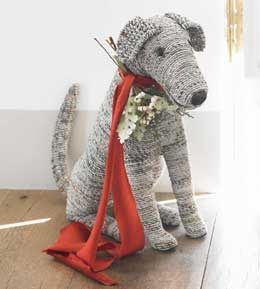
Palm Leaf Dog - handmade in Cambodia by Bloom!


If money is no object, you may prefer Vivaterra's Recycled Rover, made out of corded recycled newspaper for a cool USD$129.
Bloom Puppy will cost less than 5% of Recycled Rover. If there is demand for our puppy, it will be another income-generating project for the villagers. Yay!
Saturday, September 19, 2009
Bloom - 3 workshops in 2 years

I just found these pictures of us Bloomers (I always laugh because I think of large underpants when I say this). We are sewing some sequins on our recycled fishfeed bags. It was early days, and the workshop was in our house on St 330 in Phnom Penh, where the guesthouse and restaurant Changiville is now. From left, Neang, Sareoun, me and Sipha.

 Included in the third photo are Edany and Sophea (the one in the red shirt). Of the lot, Sipha was the former manager who was asked to leave. Sareoun left soon after. He told me he was going to rear pigs, but it turned out he was doing what Sipha did, i.e., sew the recycled bags on a piece-rate basis for other shops in Phnom Penh. The difference is Sareoun had the decency to not take a salary from Bloom while making our designs on the side. Early this year, the shop in BKK1 stopped ordering from him and Sareoun called to ask if he could re-join Bloom. Unfortunately by that time, I already had replacements whom I was happy with and could not take him in. I like Sareoun a lot because he's responsible and basically a decent chap.

 And this is Sina, Sareoun's replacement. I am very lucky to have met this young man, first as a waiter whom I hired for the now defunct Bloom Cafe (it's now the afore-mentioned Changiville). He's a super young man and here he is oversee-ing the move to the next, and third workshop. He is trying to figure out how to pile the small table onto the tuktuk. We had to move workshops because of the bad blood involving Sipha. I ended up losing the deposit because I did not fulfill the contract but it was more important that the women feel safe working in a new place where they would not be harassed by Sipha (yes, there was plenty of drama). We quickly found the third thanks to my super tuktuk driver and friend, Sophal.

 You can see the rice and fish feed bags all piled onto the tuktuk. There are 2 types of tuktuks and this kind has long padded benches on both sides of the carriage. They're different from the tuktuks that carry tourists, which have cushioned seats positioned like those in a horse carriage. This is the way we move things in Cambodia. There is another vehicle similar to this tuktuk but without a roof, and that allows you to transport tall items. It's called a l'morque. When Alan and I moved to Siem Reap from Phnom Penh in November 2007, we rented a lorry and driver for USD170. The trip took about 7 hours. Chhun Hy moved with us, as did our two dogs Austin and Nessie. Sina joined us on that trip because he had never been to Siem Reap and we could do with an extra pair of hands. We arrived at our new Siem Reap home at night and the next day I gave Sina and Chhun Hy some money to visit the temples and have a day of fun. They loved Angkor Wat. They had their photo taken by one of those freelance, roaming photographers but, to their dismay, the guy never turned up when it was time to collect the pics.
 And this is our third and current workshop in Phnom Penh, and we've been there for a year now...yes, Bloom is 3! The workshop is in a little lane off Norodom Boulevard near the Ministry of Fisheries. I took this just as Kamhut turned around to say something to me, haha. Here we are making the 1000 bags for Amnesty International. That's Chanthy on the left with Sophea at the machine behind her. Neang is on the floor drawing. Not pictured: Sina, Edany and Theary. This workshop is also in a good location and the women were happy because it is closer to Chhbar Ampou across the river, where most of them live. A couple of the women are staying at the workshop as there is a room upstairs. I allowed them to do so because otherwise they'd have to cycle for an hour each way to go to their homes at Pochentong, where the airport is. I have been lucky finding houses and workshops in Cambodia, in that landlords are always kind and prices always reasonable.
Sunday, August 30, 2009
Gifts from Singapore
 I just found these photos. The only thing I miss - Singapore food. The best, yummiest food on the planet!
So how? No chwee kueh, chicken rice, laksa, wantan mee, bakuteh. Ta-pao lah! (Singaporeans planning to visit, please don't bother asking me what I want. I only want food from home...!)
My friend Swee brought all these goodies when she visited me in Phnom Penh in 2007 (the Brahim's kuah rendang or rendang paste is for Alan, whose favourite food is curry).
 Trimmings from Little India in Singapore. Swee actually went around the Indian shops to look for ideas for me. She bought me these beautiful trimmings, which are sold by the metre. Swee suggested we add these lace and beaded trims to our bags to make them stand out. Unfortunately these and more lace and beaded trims that I subsequently bought from a large home decor store in Johor Bahru in Malaysia were all stolen by our first helper, Ming Vee, the widow from Baray district in Kampong Thom. So we never did make bags with beaded trims. Wonder how they would have looked like?
Saturday, August 22, 2009
Bloom Bags Facebook Group: 500 members and counting!
 This is amazing! We now have 500 members on the Bloom Bags Facebook Group. Wow. I am blown away. Thank you so much, all of you, for showing your support of our little project here in Cambodia. It means so much to me and the team to know people understand what we are trying to do. More than that, you actually put your names and faces to show that support. September 13 will mark Bloom's three year anniversary, and this is great encouragement to keep us going. Hugs to all from sunny Cambodia, Diana
Friday, August 14, 2009
New movie about Cambodia: "Same Same But Different"
I just heard from one of our customers in Germany, Heike in Dusseldorf. There is a new movie about Cambodia opening in Germany in January. It's called "Same Same But Different" and you can see the movie's site here.
Heike tells me the movie is a German production, but made in Cambodia, which I think means it was filmed wholly in srok Khmer. She writes: "The story is about a young German boy (David Kross --- a very famous, good and young german actor) who backpacks through Cambodia and falls in live with a Cambodian girl. After a while he knows that she is HIV-positive. I don't know how the story ends. But I think that the movie will be very, very good."
"Same Same But Different" was scheduled to be shown at Cambodia's biannual National Cinema Festival this year, but the festival was cancelled. "It is not because we lack money. Rather, it is that we are lacking in productions, and the quality is still low," Som Sokun, an undersecretary of state at the Ministry of Culture and Fine Arts told the Phnom Penh Post.
The producers of "Same Same But Different" had this to say: "The Boje Buck Production is convinced of all the human resources and the acting skills of Cambodian people and hope that soon the National Cinema Festival can be hold and that there are more Cambodian productions. We had a great time and just due to the great support of all Cambodian we could realize the movie."
Heike is excited because she recognises many of the places where the movie was filmed when she visited Cambodia a month or so ago. She asked me: "Do you know the old house with the open stairways in Phnom Penh? We loved the scene and took a picture of it." I don't know which old house Heike means but Phnom Penh is full of beautiful, old villas built during French colonial times.
Phnom Penh has great architecture which I learnt from my friend, Alison, an archeology PhD student living in Phnom Penh. Check out Alison's blog Alison in Cambodia. You can also do tours with Khmer Architecture Tours.
While in Phnom Penh, Heike visited our workshop and brought the women many gifts, including vanishing cream which the women loved. Heike started selling Bloom bags online but has recently secured a retail outlet in Dusselfdorf, which is exciting. (German customers please visit Heike's shop kleine-botschaft here).
I would love to visit Heike's shop one day. I dream also of visiting Berlin.
I like Germans - the ones I've met strike me as reflective, thoughtful people. I made a good friend, a young German photography student named Dorit, while backpacking in Europe about a decade ago. We met in Amsterdam where we hung out for about a week. One night we almost got locked out of our dorm which shuts its doors every night at midnight, because we were in the red light district.
Recently I tracked Dorit down on Facebook (through another Dorit who also comes from Stuttgart). Dorit is now a professional photographer who has exhibited her photographs. I am so glad her dream came true! I like Facebook for this reason - imagine meeting someone you spent only a week with in a strange country and then hook up a decade later to find that we are still the same people living or pursuing the dreams we once shared with each other.
Wednesday, August 12, 2009
Sending parcels to and from Cambodia
I am sorry for not updating the blog. My partner Alan is finally back from Scotland so I feel settled now. We are taking walks and playing with the dogs again. We are also experimenting with bamboo - if we succeed I will share with readers!
I have also been busy with a diaper bag someone in the US wants us to make. I've never been a mommy so don't know what to look for in a good diaper bag. We have made one according to specs emailed to us and our customer L says it looks great. L is so committed to the environment she is sourcing for recycled straps and other things we can use to make the bag 100% (or as close to 100%) recycled.
She also sent us a sample from the US which was due to arrive at our shop in the Russian Market on Sunday but it still has not appeared. The tracker says it is in Phnom Penh...somewhere. I really hope we get it.
One time a customer from the UK sent us some ribbons she had ordered from a supplier in China. The package was sent through an agent in China and arrived in Phnom Penh. Unfortunately it was stuck in customs.
First I went to the airport in Phnom Penh. I was told to go to the big building beside it, which says customs or something. That building is a large warehouse, where all sorts of things are sent to Phnom Penh by air and duty has to be paid.
There, I was ushered to an office where people sat waiting to talk to officials behind desks. I had to fill in some paperwork signing when the stuff arrived, a description and how much it is worth. From there I was told to go to another customs office in Phnom Penh city to get a stamp or signature (I can't remember as this happened last year - I should have written about it then but my customer and me were too upset by the whole incident). Then I was to bring that form back to pay up and collect the ribbons.
I cannot remember how much I was supposed to pay for customs to release the ribbons but it was far more than what the ribbons were worth. I even got two delivery agents involved, one a very large MNC to assist us, thinking personal relationships might save the day. But no go - it was still a few hundred dollars they wanted.
In the end, we had to make the products for our customer without the ribbons. It was a good lesson.
For me, this is the reason I do not use specially imported stuff in making our bags. I just cannot be assured the stuff will get to us. While almost everything used to make a Bloom bag is imported from Vietnam (nylon straps, zips, zipper pulls, buckles, D-rings, clasps - all these are imported since Cambodia makes very little of its own), we buy them from retailers at Orussey market in Phnom Penh. YKK zips we have to order from its representative in Cambodia as YKK does not sell through retailers.
I was advised by the MNC delivery company that in the future, they should be alerted before the delivery package leaves the country of origin for arrival in Cambodia. This way, they will be able to work with the agent in the first country and customs in Cambodia so the package will arrive to us safely. Once it has arrived in Cambodia, it is too late, and we have no leverage in getting our goods out.
It seems like so much trouble for so little. At the same time, if we do not import materials, we are limited by what is available in Cambodia, and the quality of the materials imported from Vietnam is shall we say, not the best.
The other problem is the Cambodian retailers buy, I suspect, whatever is cheap. What this means is the designs of the buckle, clasps, zipper pulls etc change from month to month. We are not guaranteed the same design, because it depends what the retailers get from Vietnam.
For instance, we used to buy zipper pulls that were a fat teardrop shape and of good quality. But this is now not available. It is hard to believe the Vietnam factory has stopped making that design, which is why I suspect it is the retailers who are always on the lookout for cheaper stuff. In this case, we have to substitute the teardrop one with a leaf shaped one or the ordinary flat, oval one - same price but of lower quality. Very frustrating, especially if we have an order where the customer expects us to make the same products as per the sample.
The other big problem working in Cambodia is the expensive delivery costs from Cambodia and people can see for themselves delivery costs on Cambodia's Express Mail Service website: www.ems.com.kh.
One kg to the US costs USD45 which is comparable to Singapore where it costs SGD64 (around USD44) but much more expensive than Thailand's EMS (calculate the rate here. From Thailand it costs USD35.55 to send a 1 kg parcel to the US, or about 30% less than to send from Cambodia.
Most of our bags are priced under USD20 which is a problem when the courier costs as much as the bags themselves (1 kg of bags could be between 2 to 8 bags, depending on the design). It is something I have to take into account when designing our e-commerce site.
As for shipping costs, they are more expensive than courier costs, because there are all sorts of paperwork and taxes to pay. Even the shipping company advises us to just use courier because shipping is only cost-effective when you are sending big items or a lot of them. Shipping companies charge per cubic metre, and costs go down per cubic metre when you ship a lot. Even sending a thousand bags to Europe by air cost me less than it would by ship. Go figure.
A final note on the postal service in Cambodia. In 2006 my dad sent me a postcard from Singapore which never got to me. When he came to Phnom Penh a couple of months later for a visit (we were living in Phnom Penh then) dad actually went to the central post office near Wat Phnom to ask about his postcard. The postmaster there gave him the mobile number of the postman who was responsible for deliveries in our area (BKK3) but of course we never found the postcard. Still, I was impressed. Where in the world would you get the mobile phone number of your postal delivery guy?
Wednesday, July 22, 2009
Rose Charities, Surfkini and Bloom
 Woohoo! Surfkini just wrote about Bloom on its blog. Surfkini, founded by Annie Henley in Brooklyn, New York, makes the only surfing bikini designed especially for a woman. Pretty impressive, as the company was asked for its views on 2010 swimwear trends along with other giants in the swimwear business, including Billabong, Body Glove, O'Neill and Rip Curl.
Annie is also a board member of Rose Charities, which is how I came to know her. Dr William Grut, a doctor with Rose Charities Cambodia read this blog and was kind enough to put me in touch with Annie as well as some of his other friends. William recently gave an interview on acid violence in Cambodia and how the vicious, evil, attacks destroy the lives of its victims, some of whom are children. According to the Cambodian League for the Promotion and Defense of Human Rights (LICADHO), an acid attack occurs every 25 days--already shocking, but it seems actual figures may be higher since many attacks go unreported.
Rose Charities Cambodia was established in 1998 by one of the founders of Project IRIS eye program. I know about Project IRIS because the doctors operated on one of the Riverkids charges, a 14 year old girl who had to have corrective eye surgery. This work was done free.
Rose Charities, too, runs ophthalmic surgical, medical and optometric services in conjunction with the Cambodian Ministry of Social Affairs, at Kien Khleang National Rehabilitation Center, on the outskirts of Phnom Penh.
Rose has had a very challenging time in Cambodia. In 2002 it was looted and gutted by thieves but was able to reestablished itself through it the dedication of its staff members, directed by Dr Hang Vra. This is so touching: "Even after the clinic had been gutted by thieves, Dr Vra would come to attend the empty shell on his old motor-bike, just so the hundreds of poor Cambodians would be seen and comforted - even though all his instruments and medications were gone. He continued this, day in day out for weeks and months until finally he was able to start building it all from the beginning again."
Cambodia can be a very difficult place for people who try to help the country. I myself have been cheated by trusted Cambodian staff members. In one case, our manager inflated receipts and pocketed the difference, and stole our bags to sell to other shops around town. After being sacked, that person opened her own shop, selling the exact same Bloom bags as she had stolen all the templates. It wasn't the monetary loss that was upsetting, but the betrayal of trust. It makes you watchful, less trusting and worse of all for me, made me lose confidence in my judgement of people.
It is hard enough for a foreigner, but imagine what it must be like for a Cambodian who is trying to help his people and then gets cheated or robbed by his countrymen. I know one Cambodian director of an NGO who always looks mournful because jealousy from other Cambodian directors of NGOs operating in the same space as he (orphanages) means he's had to deal with a lot of backstabbing and ugliness.
But there are of course good Cambodian people as Dr Hang Vra exemplifies.
For me, it was the wise words of one of my best friends at home in Singapore that helped me get over the crisis and re-focus on Bloom. Leon told me, "Think of the objective good you're doing, and not of the subjective responses of individual Cambodians."
And this is what keeps all of us going. We know what we do makes a difference, even though very often it is a case of "Two steps forward, one step back."
Back to Rose Charities. Because it is run by volunteers, the charity has almost no overheads. This makes its operations incredibly cost-effective, restoring sight for as little as USD20 and repairing a cleft palate or make a child walk again for USD 50. I love what they say on their website: "We are just as cynical as you about how much of the donated dollar reaches its destination. (Have you read 'Lords of Poverty' by Graham Hancock?) We know exactly where our donations go and can follow each dollar right down to 'the field'." My thoughts exactly.
So if you'd like to share your time or money to help people in need of surgery to enable them lead their lives with dignity, please visit rosecharities.info and see how a little goes a long way.
In December, Annie and fellow model Noot Seear organised a fundraiser for Rose in NYC. "Be Bare" raised more than USD40,000. You can read "Models go bare for charity" or watch the Youtube video.
I am convinced that in the future, every business will have a social or environmental aspect to it and I am glad Surfkini has already set itself apart as one of these businesses with a heart.
Subscribe to:
Posts (Atom)
LinkWithin
